

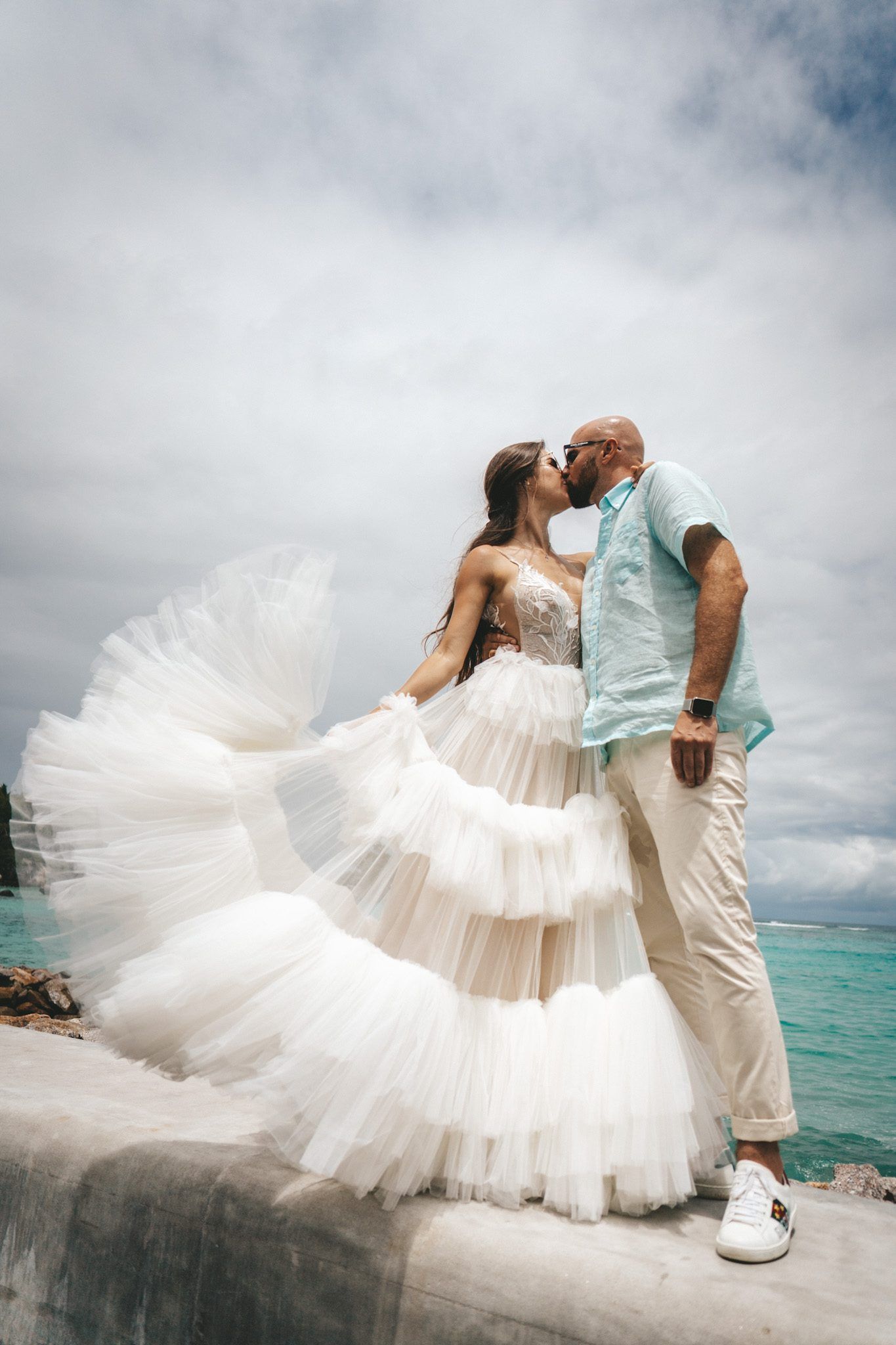
A Seychelles ceremony is barefoot, warm and often a little breezy, which quietly rules some dresses out and lets others come alive. The brides who are most comfortable, and who move most freely in their photographs, almost always chose light. This is not about spending less. Some of the loveliest dresses we have photographed were simple slips, and some of the most uncomfortable afternoons belonged to heavy structured gowns that looked magnificent for twenty minutes and like armour by golden hour. Here is how to choose so the dress works as hard for you as the setting does.
Fabric decides everything
In this climate the fabric matters more than the label, the designer or the price. The dresses that feel wonderful all afternoon are the ones that breathe and flow, and they catch the sea breeze in a way that photographs like movement in a film. The dresses that suffer are the ones that trap heat against warm skin.
- Choose chiffon, georgette, organza, crepe or light silk, all of which move, breathe and stay cool
- Avoid heavy satin, dense all-over beading and stiff structured bodices, which hold heat and grow uncomfortable as the afternoon goes on
- A little stretch, or a relaxed unlined cut, lets you breathe, sit for the signing and dance without thinking about the dress at all
A silhouette that loves the sand
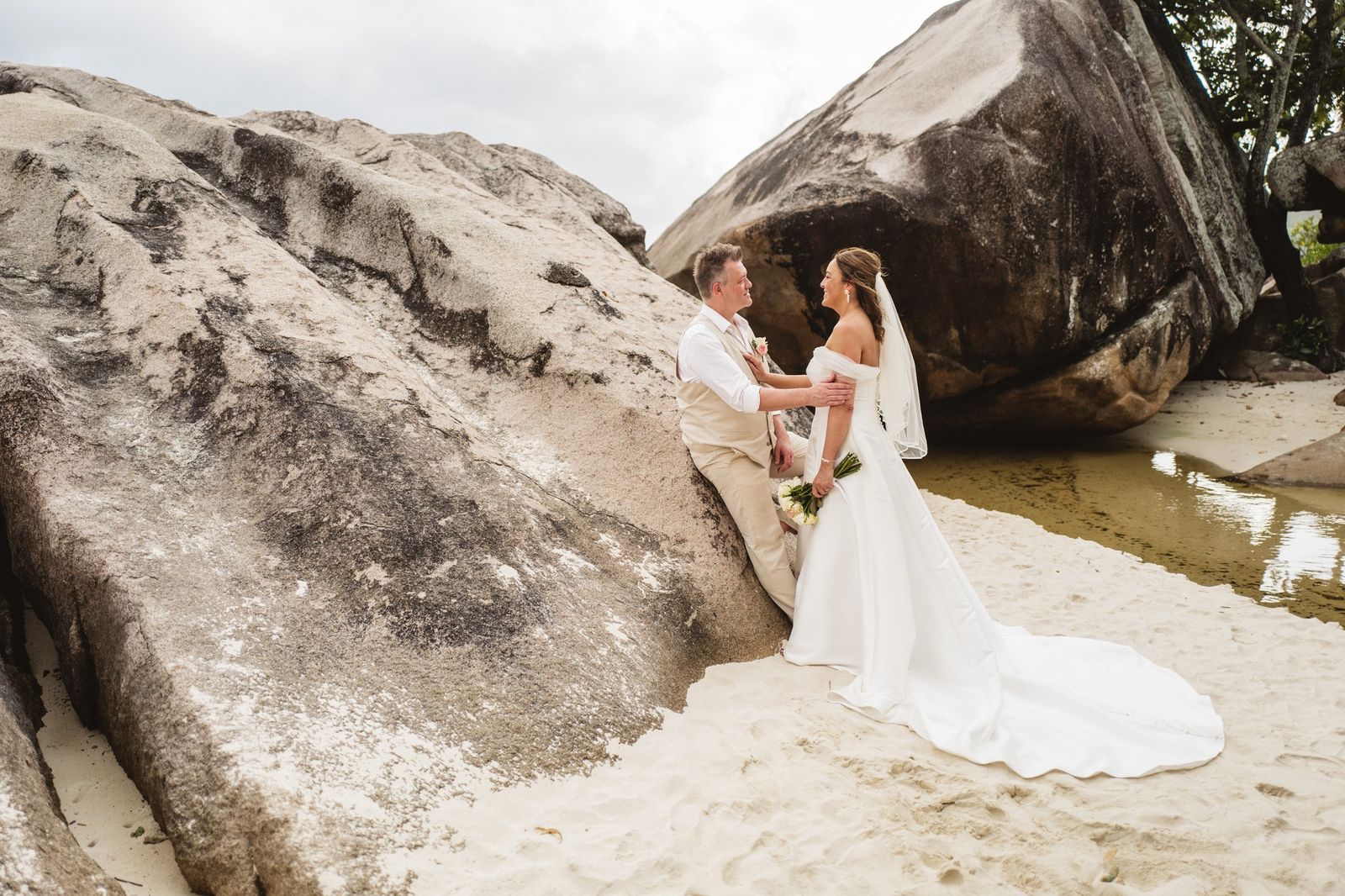
Slip dresses, soft A-lines and flowing empire lines all glide on a beach and move beautifully in a breeze. A long, heavy cathedral train collects sand and fights the wind, so consider a shorter sweep train or a detachable one you can lift away after the ceremony for the portraits and the walk. You will be barefoot or in flat sandals, so hems can sit a touch shorter than you would plan for a church aisle, which also keeps them out of the wet sand at the water line.
Colour, in honest island light
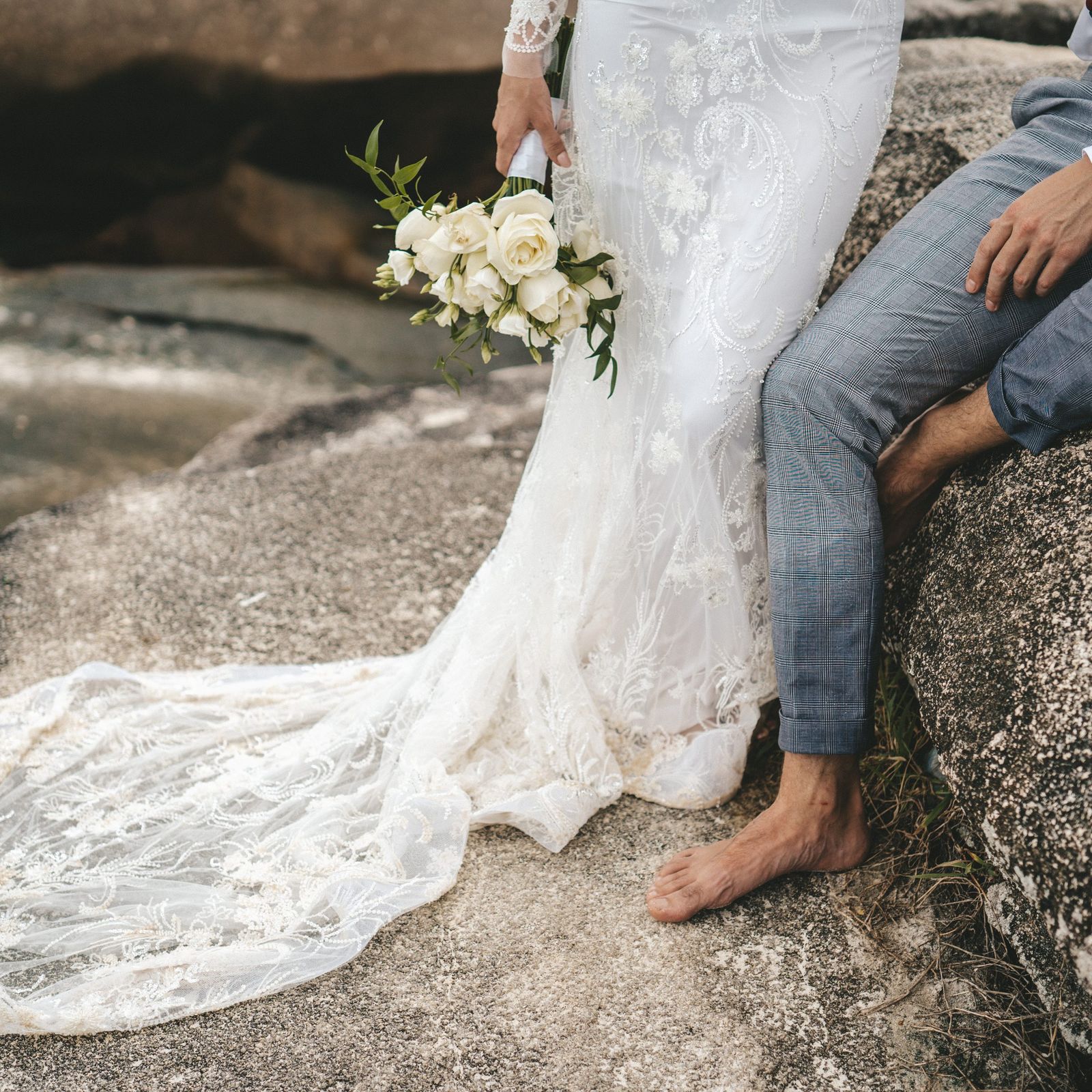
Bright equatorial light is truthful, and it treats whites differently than a showroom does. A stark, cool white can read almost blue against golden sand and warm skin, while ivory, champagne and the softest blush glow warmly in photographs and in person. None of this means avoiding white. It means choosing your white with the island sun in mind rather than the boutique spotlight, and if you love a true white, trusting your photographer to expose for it in the kind afternoon light rather than the harsh midday sun.
Getting it there without a crease
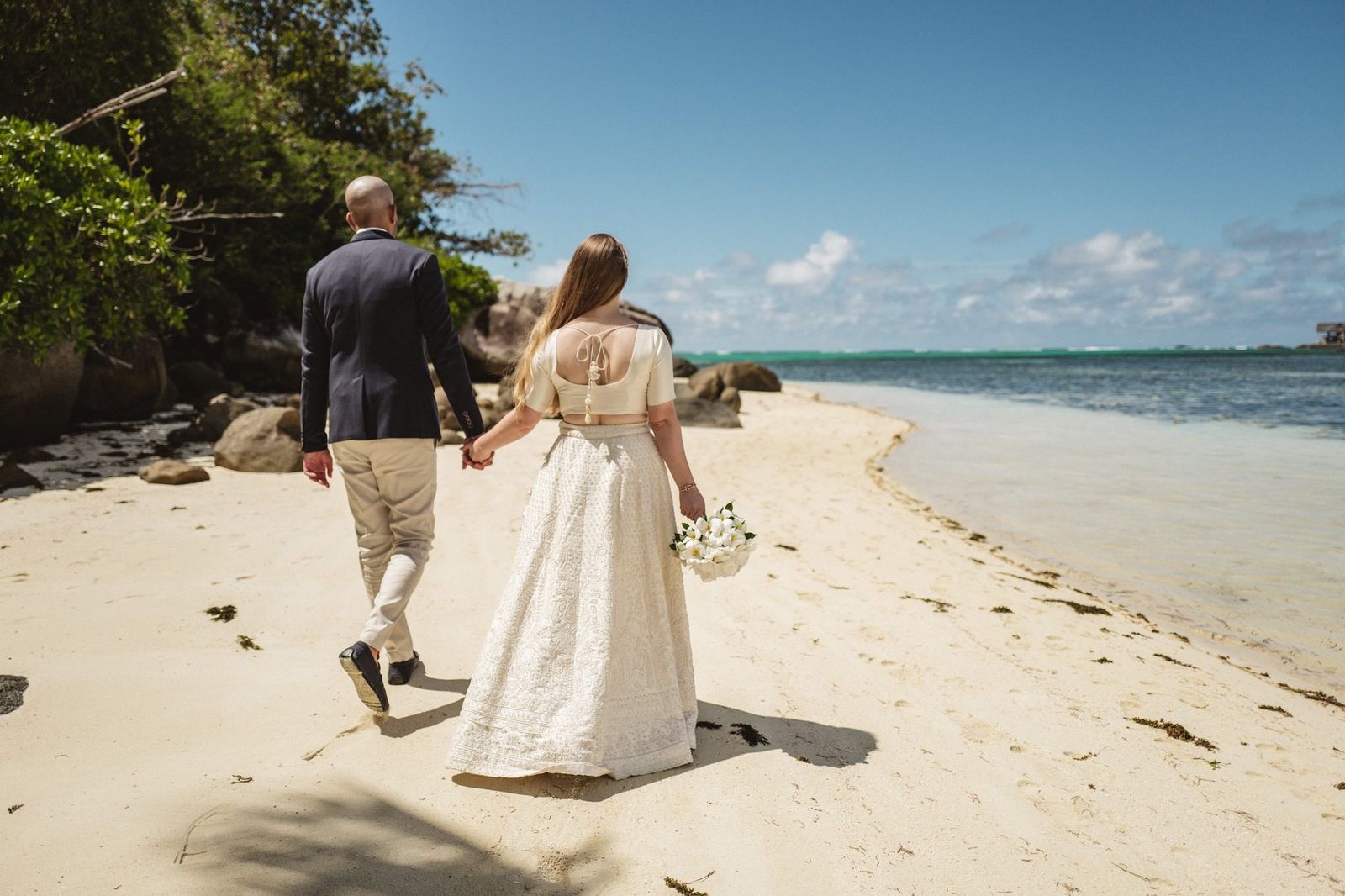
Never check your dress into the hold. Carry it on, folded in tissue inside a garment bag, and most cabin crews will hang it for you if you ask kindly and early. On arrival, hang it in a steamy bathroom and let the humidity that troubles your hair do you one great favour and drop most of the creases overnight. We can also arrange a proper professional steam before the day.
Once it is here, store it away from direct sun and damp, since strong light can mark delicate fabric over a few days and sea air is everywhere. A simple breathable cotton cover is kinder in the heat than a sealed plastic one.
The quiet truths no one mentions
Movement matters more than you expect, because so much of your day is walking on sand, climbing gently onto warm granite and standing in a breeze for photographs. Comfort is not the enemy of beautiful here, it is the source of it, since a bride who can move looks alive in every frame. And many brides bring a second, simpler dress for the evening, not for show but for the pleasure of dancing and dining without a train, which is one of the small luxuries a destination wedding quietly allows.