


Grand Anse is one of the most dramatic beaches on La Digue, a wide, wild sweep of sand on the island's east coast with rolling surf and a huge open sky. It is a world away from the calm shallows of Anse Source d'Argent, and on film it is breathtaking. We shot a full wedding here, and you can watch it on this page, along with the honest note every couple should hear about the water.
Watch the real wedding film we shot here
The setting
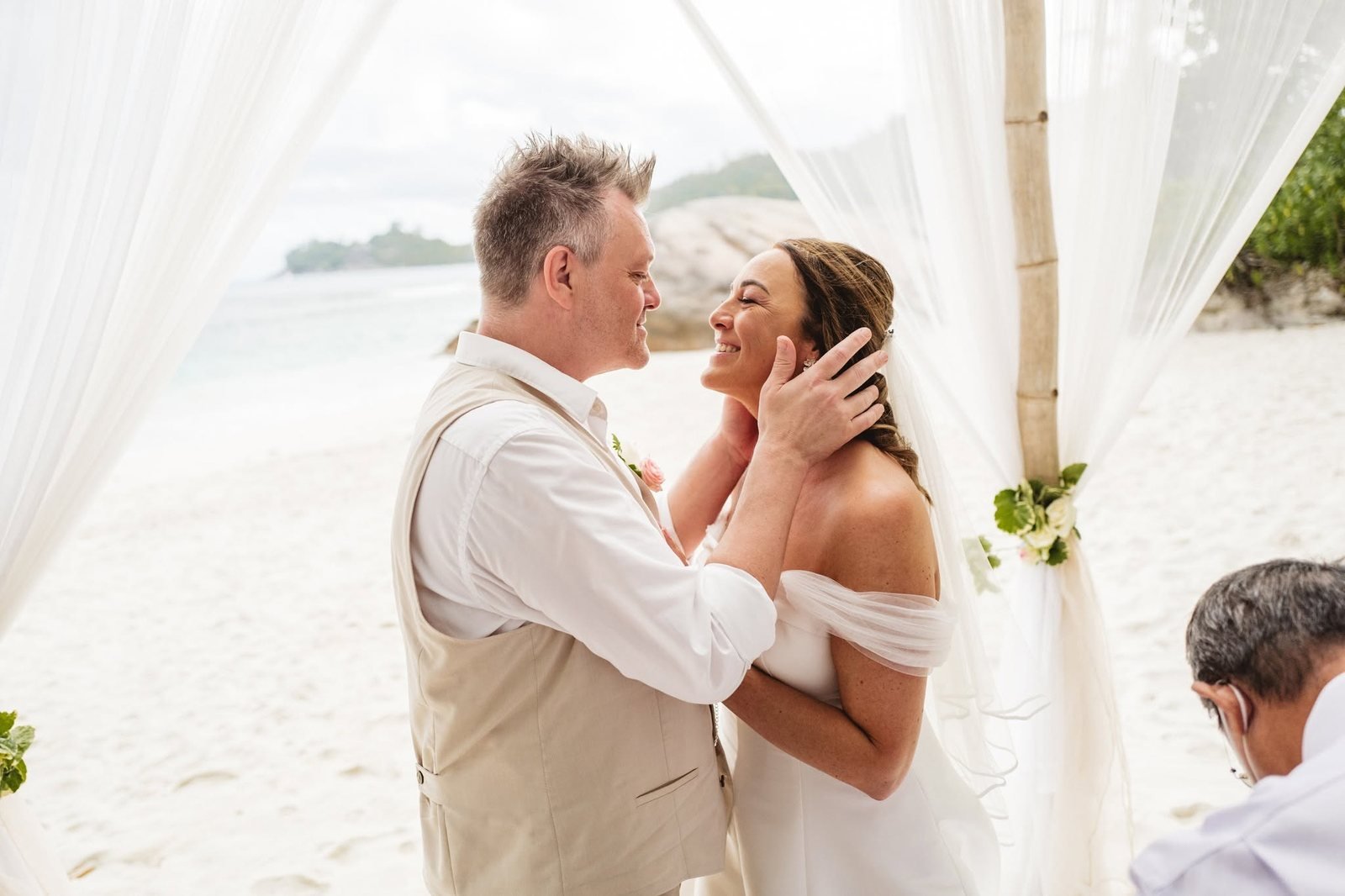
Grand Anse is raw Seychelles, a long beach open to the ocean, with real waves, powerful light and none of the postcard tameness of the sheltered west-coast bays. For a wedding it gives you drama, wind in the hair, surf behind the vows, a sky that goes on forever, which makes for some of the most cinematic images we capture on La Digue. It rewards couples who want their day to feel elemental rather than gentle.
The honest word on the sea
Here is the truth we tell every couple. Grand Anse has strong currents and heavy surf, especially during the south-east trade winds from about May to September, and it is not a beach for swimming then. That does not stop it being a spectacular place to marry and photograph, it simply means we treat the water with respect, keep the ceremony and portraits safely on the sand, and choose your timing with the season in mind. Knowing this in advance is exactly why it is never a problem.

How we work here
A wild beach needs a filmmaker who can work with wind and big light, and that is the kind of day we love. We plan the ceremony and portraits around the safest, most beautiful part of the beach and the best hour, and reaching Grand Anse on La Digue is part of the day we arrange for you. Watch the real Grand Anse wedding on this page, then tell us your month and we will plan the day around the sea and the light.

The beach here, and when it is at its best
Seychelles has two seasons blowing from opposite directions, and that is what decides whether a beach is calm or blown on your date. From roughly May to September the south east trades run dry and steady, pushing chop and drifting seaweed onto anything facing south or south east. From roughly November to March the north west monsoon takes over, wetter and lighter on wind, and the exposure flips. April and October are the changeovers, when it goes quiet on every coast.
Grand Anse on La Digue faces south east, which puts it at its calmest from November to April. This is the honest one. It faces straight into the south east trades, so from May to September it takes real swell and strong currents. It is magnificent in those months and it photographs like nowhere else, but for a calm ceremony on the sand the north west monsoon window is the kinder choice, and we will say so rather than sell you the postcard.
We will still confirm the exact spot and the exact hour for your date before you commit to it, because the sea has moods and a beach is not one single place.
The paperwork, and what the government charges here
The legal side is lighter than most couples expect. As two foreign nationals you need a valid passport and an apostilled birth certificate each, plus a divorce certificate if either of you has been married before or a death certificate if widowed. The banns are published for eleven days before the ceremony. Two witnesses must be present, and if you are marrying as just the two of you we provide them.
The government marriage fee here is SCR 3,000. That is the Civil Status Office rate for two foreigners marrying on Mahe, Praslin or La Digue.
One detail that catches people out. The Civil Status Office expects to register the marriage at its own office, so if the registration is to happen anywhere else, which is exactly what a ceremony at the resort means, it asks to be told at least a week beforehand. That is our job, not yours, but it is worth knowing the week exists.